
Introduction
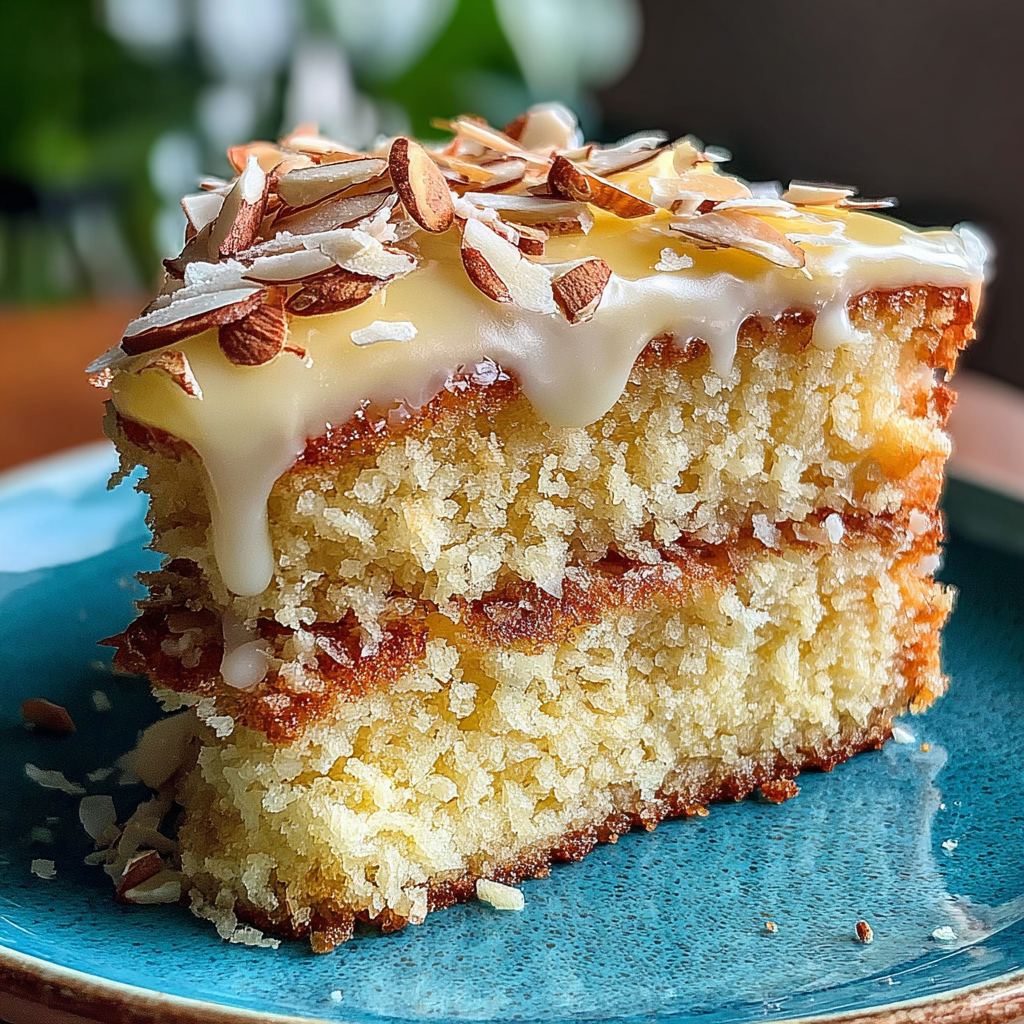
Coconut Almond Cake is a delightful dessert that bridges tropical flavors with nutty undertones. The combination of shredded coconut and almond extract creates a moist and flavorful cake that’s perfect for celebrations or a simple afternoon treat.
This cake beautifully balances sweetness with the rich characteristics of almonds, making it a standout addition to any dessert table. Whether you're an experienced baker or a kitchen novice, this recipe is approachable and offers a delicious reward at the end.
Ingredients
- 1 ½ cups all-purpose flour
All-purpose flour provides the structure necessary for the cake, while allowing it to rise correctly. It creates a light, tender crumb that complements the moistness of the coconut. - 1 cup granulated sugar
Granulated sugar not only sweetens the cake but also helps create a fine, tender crumb through the creaming process. It enhances the overall flavor, balancing the coconut's natural sweetness. - ½ cup unsalted butter, softened
Softened butter is essential for creaminess and moisture in the cake. It adds richness and flavor while contributing to the lightness of the batter when creamed with sugar. - 3 large eggs
Eggs act as a binder in the cake, helping to provide structure and stability. They also contribute moisture and richness, enhancing the overall flavor and texture. - 1 cup shredded coconut
Shredded coconut adds a chewy texture and a rich, tropical flavor to the cake. It also contributes moisture, making the cake distinctly soft and delightful. - 1 teaspoon almond extract
Almond extract introduces a subtle yet distinctive nutty flavor that pairs excellently with the coconut. It elevates the overall taste and adds depth to the cake. - ½ teaspoon baking powder
Baking powder acts as a leavening agent that helps the cake rise as it bakes. It ensures a light and fluffy texture, preventing the cake from being dense. - ½ teaspoon baking soda
Baking soda, an additional leavening agent, contributes to the cake's rise and helps maintain its moisture. It balances acidity in the batter, especially if any acidic ingredients are included. - ¼ teaspoon salt
Salt enhances all other flavors in the cake, providing balance to the sweetness. It helps to bring out the richness of the coconut and almonds. - ½ cup milk
Milk enriches the batter, contributing to a moist texture. It also assists in dissolving dry ingredients, ensuring an even distribution throughout the cake.
Directions & Preparation
Step 1: Preheat your oven to 350°F (175°C).
Preheating the oven ensures that the cake bakes evenly from the start. This crucial step develops a proper texture and helps achieve a beautiful golden crust.
Step 2: Grease and flour a 9-inch round cake pan.
Greasing and flouring the pan prevents the cake from sticking, which is essential for a clean release once baked. This will ensure your cake retains its shape and looks presentable.
Step 3: In a large mixing bowl, cream the softened butter and sugar together until light and fluffy.
Creaming butter and sugar incorporates air into the mixture, creating the desired light texture. The fluffy consistency is vital for the cake's rise and moistness, making this step crucial for a good outcome.
Step 4: Add the eggs, one at a time, mixing well after each addition.
Incorporating eggs gradually allows for better emulsification, contributing to a smoother batter. This ensures even distribution of moisture, enhancing the cake’s overall texture and structure.
Step 5: Stir in the almond extract and shredded coconut.
Adding almond extract and coconut infuses the batter with flavor while also contributing moisture. Ensuring even distribution of these ingredients avoids clumps and creates a harmonious taste throughout the cake.
Step 6: In a separate bowl, whisk together the flour, baking powder, baking soda, and salt.
Whisking the dry ingredients together allows for uniform distribution of the leavening agents and salt. This step is essential to avoid any pockets of baking powder or soda in the batter, which could affect rising.
Step 7: Gradually add the dry mixture to the wet ingredients, alternating with milk.
This method helps to maintain the cake's structure and moisture. Alternating prevents overworking the batter, which can lead to a dense cake and is key to achieving the light texture you desire.
Step 8: Pour the batter into the prepared cake pan and smooth the top.
Smoothing the top of the batter ensures an even rise and prevents a dome-like appearance. An even distribution of batter results in a professional-looking cake.
Step 9: Bake in the preheated oven for 25-30 minutes or until a toothpick inserted in the center comes out clean.
This is the crucial baking step where chemical reactions occur, producing the cake's final texture and flavor. The toothpick test indicates doneness, helping to prevent overbaking, which can dry out the cake.
Step 10: Let the cake cool in the pan for 10 minutes, then transfer to a wire rack to cool completely.
Cooling in the pan temporarily helps set the cake structure and prevents breakage. Transferring it to a wire rack ensures even cooling, preventing a soggy bottom and preserving texture.
Step 11: Once cool, frost or serve as desired.
This final step allows you to customize the presentation of your Coconut Almond Cake. Whether you choose frosting or enjoy it plain, this cake serves as a delicious canvas for various toppings or decorations.

The Role of Coconut and Almond in This Cake
Coconut and almond work harmoniously in this cake, each bringing unique textures and qualities to the forefront. The shredded coconut adds a chewy bite, enhancing the moistness while imparting a tropical essence. The almond extract provides a warm, nutty flavor, creating a comforting aroma that envelops the kitchen as the cake bakes. This combination results in a distinctly indulgent experience.
Tips for Achieving the Perfect Texture
Texture is key when making a Coconut Almond Cake. Ensure your butter is adequately softened for optimal creaming with sugar. When incorporating dry ingredients, a gentle fold instead of vigorous mixing aids in maintaining the cake’s airy structure. Proper baking time is crucial; monitor closely as all ovens can vary, aiming for that perfect balance where the cake is golden but not overcooked.
Serving Suggestions to Elevate Your Cake
To enhance your Coconut Almond Cake experience, consider pairing it with whipped cream or a light glaze for added sweetness. A sprinkle of toasted coconut on top creates an appealing visual finish, adding an extra layer of texture. Fresh berries or a scoop of vanilla ice cream also complement the flavors beautifully, transforming this simple dessert into a delightful treat fit for any occasion.
FAQs
What if my batter is too thick?
If your batter is too thick, you can add a tablespoon of milk at a time until it reaches a pourable consistency. This adjustment helps ensure even baking and a moist final cake.
How can I intensify the coconut flavor?
To enhance the coconut flavor, consider using coconut milk instead of regular milk or adding a splash of coconut extract along with the almond extract for a more robust taste.
Why did my cake sink in the middle?
A cake may sink in the center due to underbaking or too much liquid in the batter. Ensure that you bake until a toothpick comes out clean and measure ingredients accurately for the right balance.
Can I use self-rising flour instead of all-purpose flour?
Yes, but if using self-rising flour, omit the baking powder and baking soda to avoid excessive leavening, which could create a dense texture.
What toppings work well with Coconut Almond Cake?
Toppings such as a light cream cheese frosting, toasted coconut flakes, or fresh fruit like berries or bananas pair beautifully with the flavors of this cake.
How can I incorporate more nuts into the cake?
To include more nuts, consider folding chopped almonds or walnuts into the batter before baking. This adds texture and enhances the cake's nuttiness.
Conclusion
Coconut Almond Cake is a deliciously moist dessert that showcases the tropical and nutty elements perfectly. It can easily become a staple in your baking repertoire, offering a cozy twist to traditional cakes.
As you prepare this cake, remember that baking is both a science and an art. Don’t hesitate to make this recipe your own by incorporating different flavors, toppings, or fillings, allowing your creativity to shine.
Recipe Card

Deliciously Moist Coconut Almond Cake Recipe
Ingredients
Method
- Preheat your oven to 350°F (175°C).
- Grease and flour a 9-inch round cake pan.
- In a large mixing bowl, cream the softened butter and sugar together until light and fluffy.
- Add the eggs, one at a time, mixing well after each addition.
- Stir in the almond extract and shredded coconut.
- In a separate bowl, whisk together the flour, baking powder, baking soda, and salt.
- Gradually add the dry mixture to the wet ingredients, alternating with milk.
- Pour the batter into the prepared cake pan and smooth the top.
- Bake in the preheated oven for 25-30 minutes or until a toothpick inserted in the center comes out clean.
- Let the cake cool in the pan for 10 minutes, then transfer to a wire rack to cool completely.
- Once cool, frost or serve as desired.
Notes
Additional serving suggestions: pair with a crisp salad, garlic bread, or roasted seasonal vegetables for balance.
For make-ahead, prep components separately and assemble just before heating to preserve texture.
Taste and adjust with acid (lemon/vinegar) and salt right at the end to wake up flavors.